
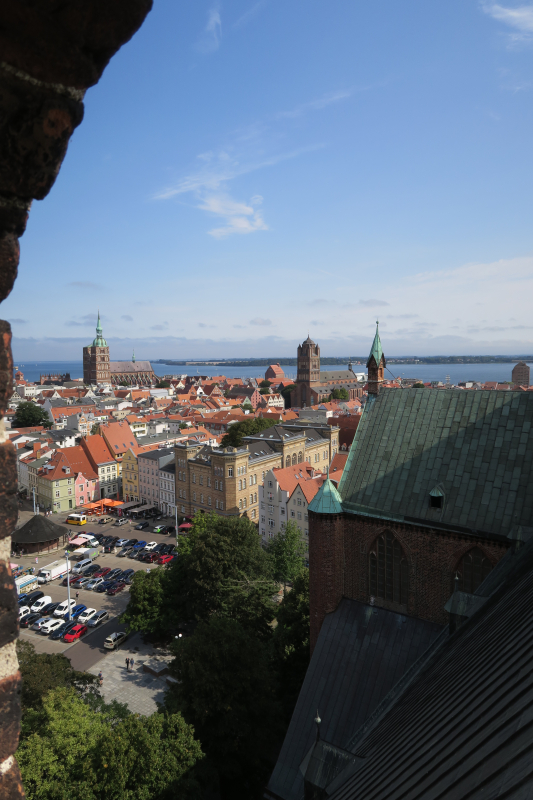
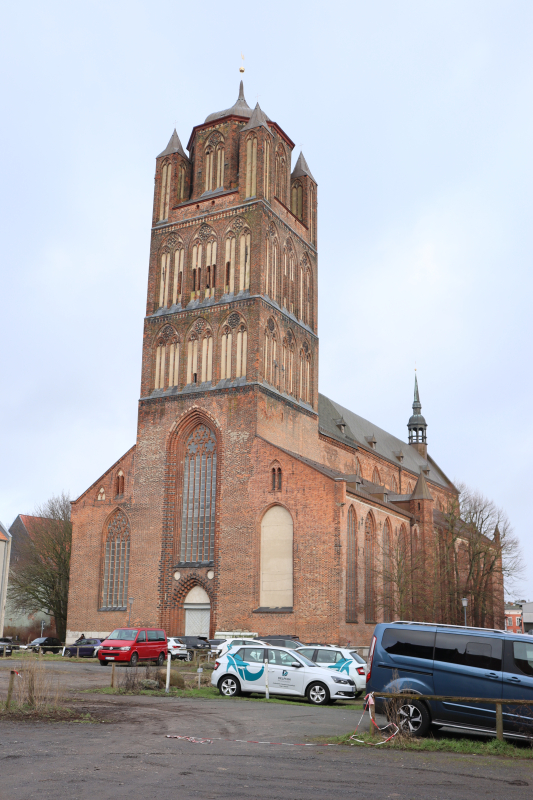
Stralsund, St. Jakobi, Wegscheider Organ
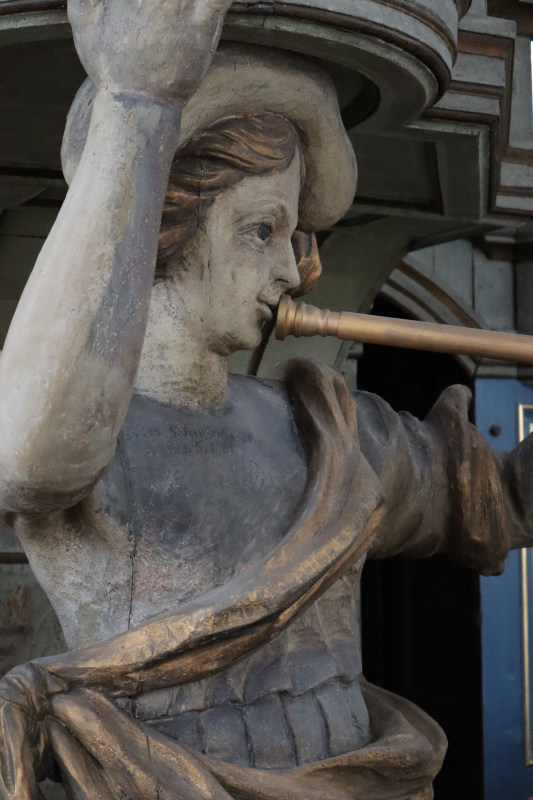
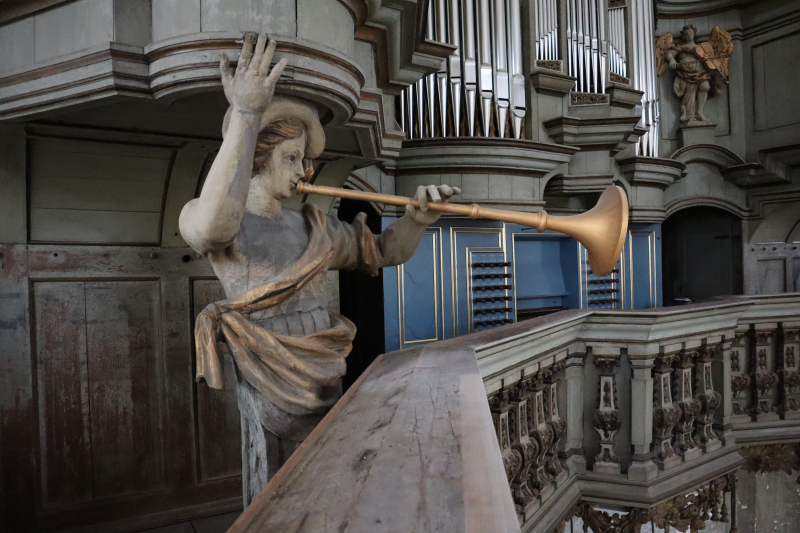
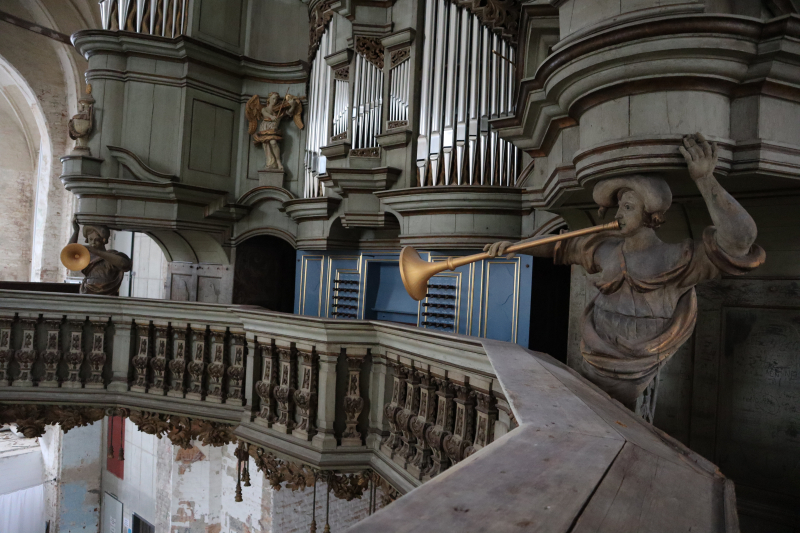
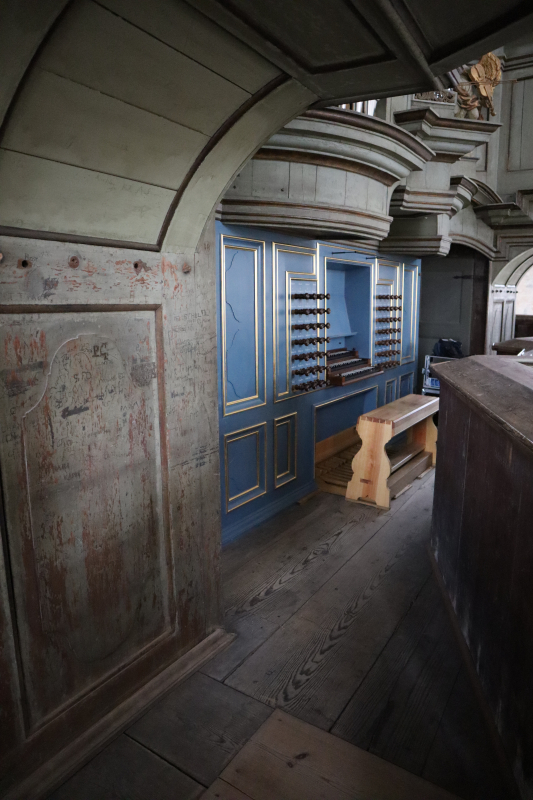
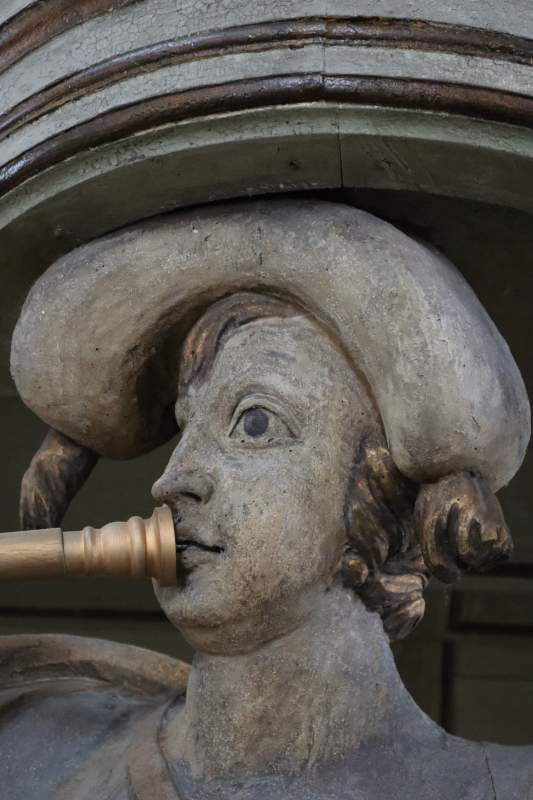
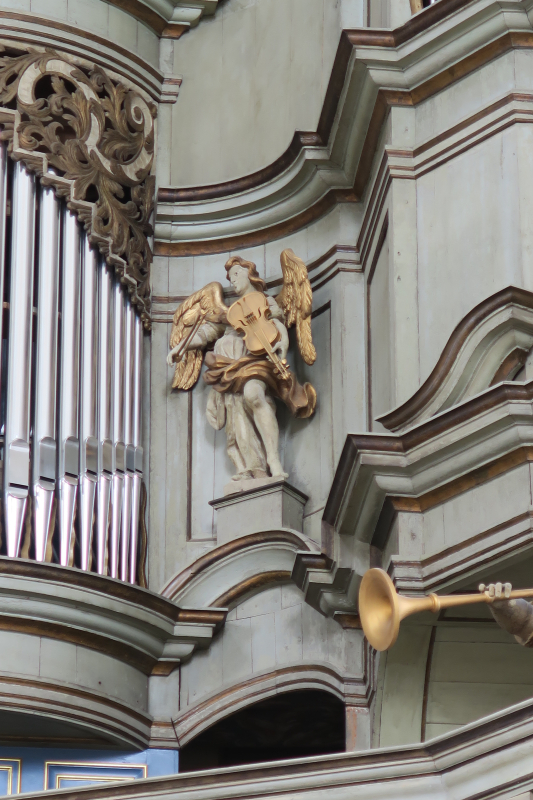
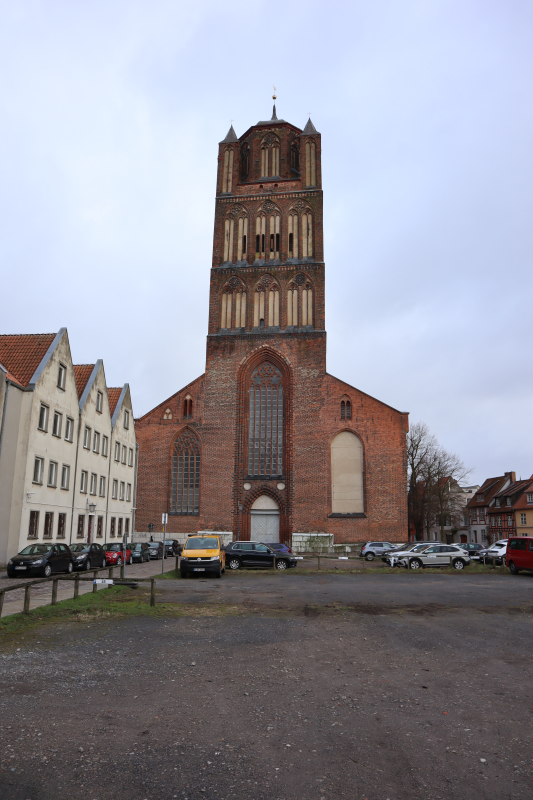
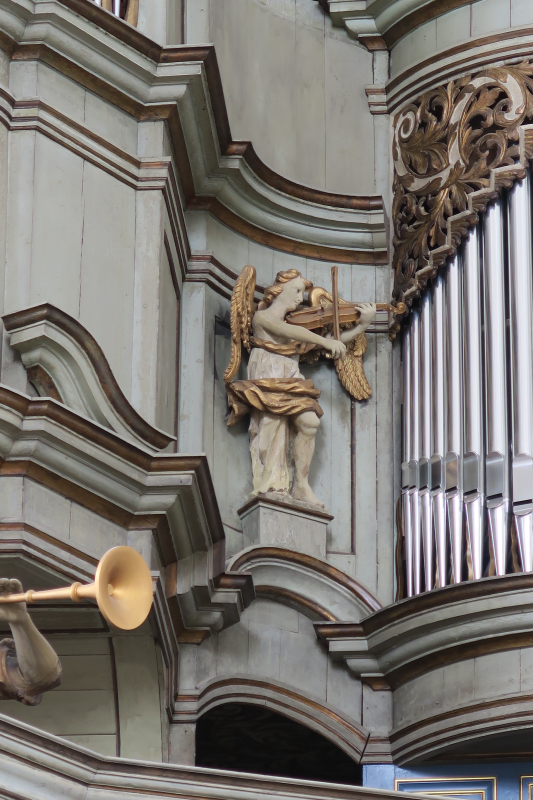
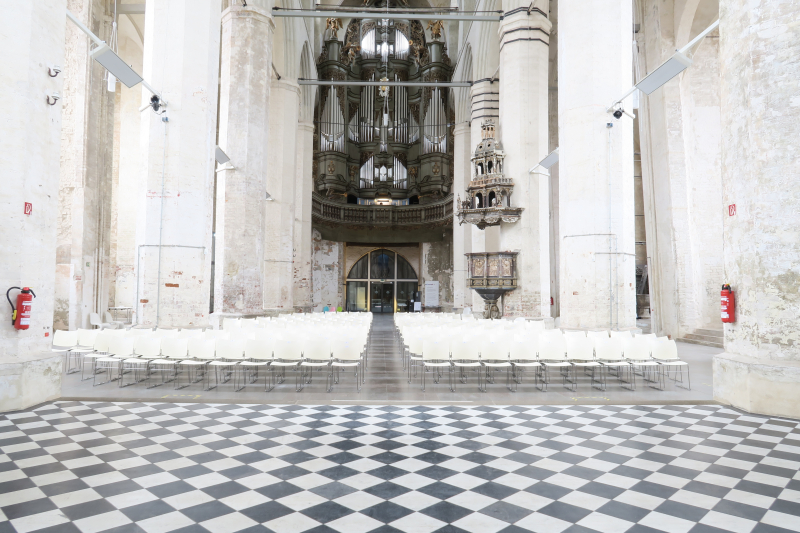
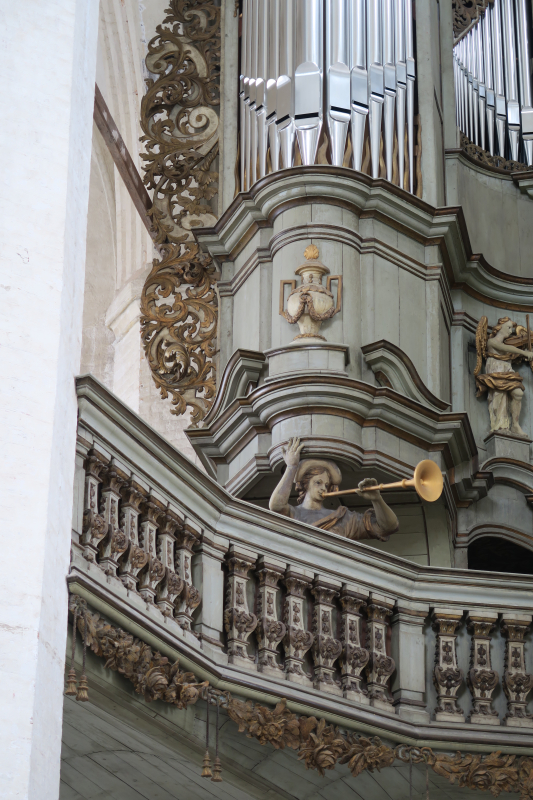
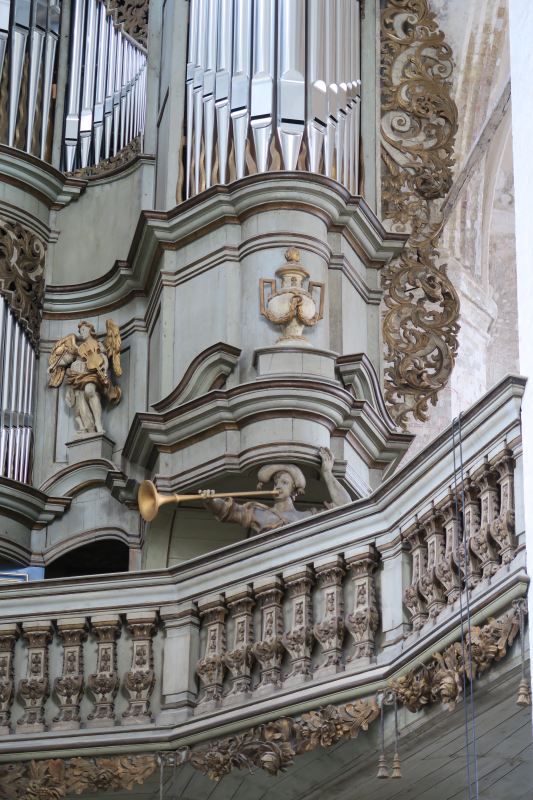
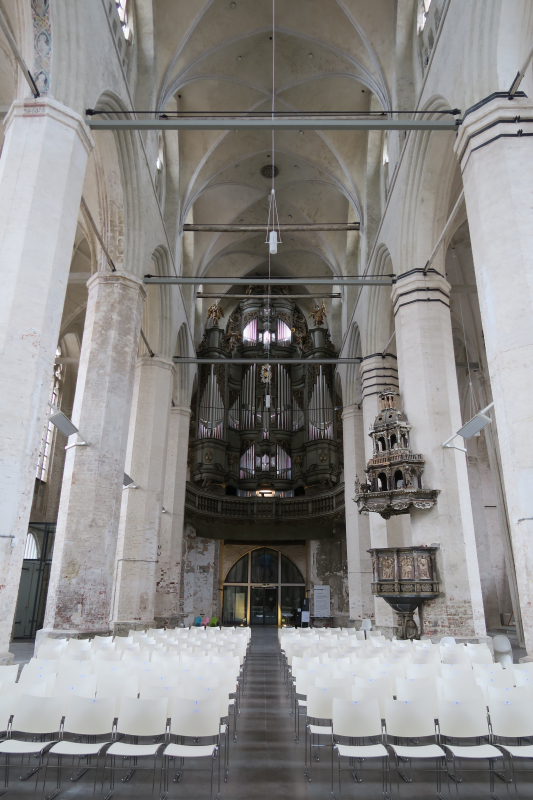
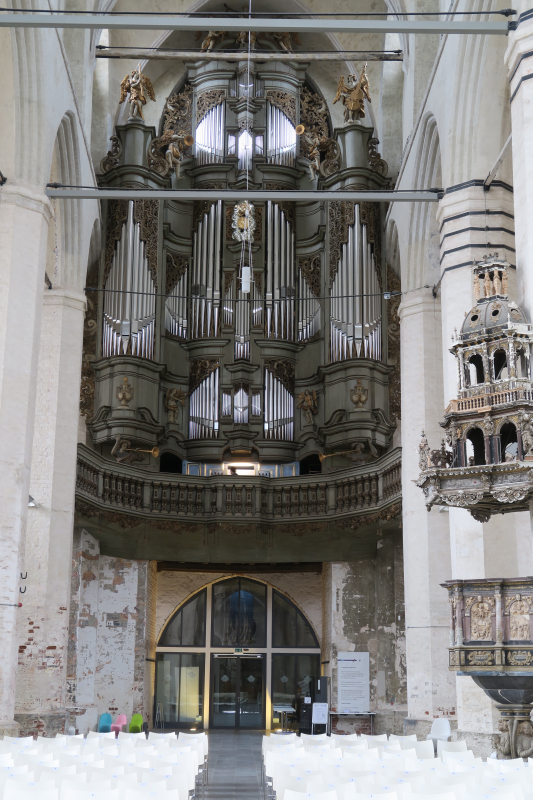
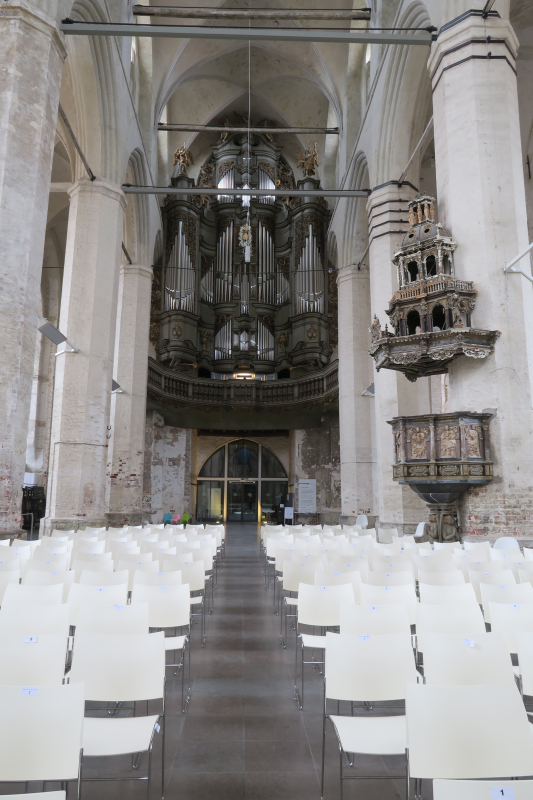
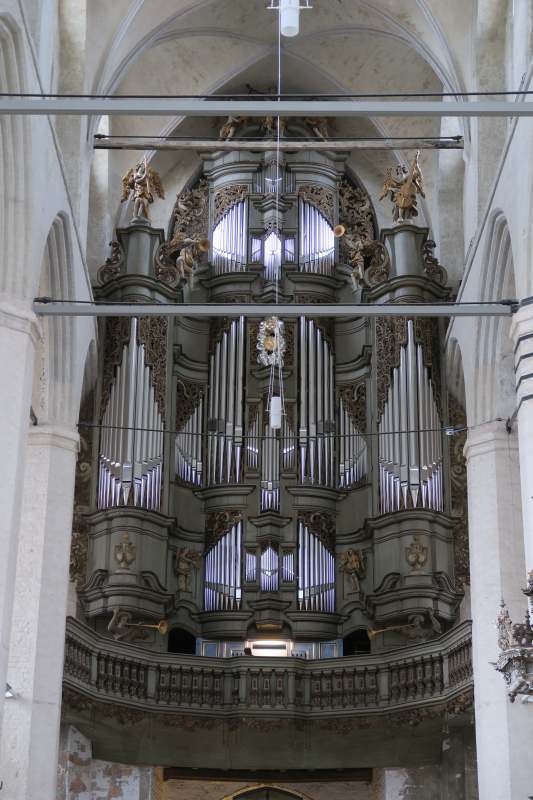
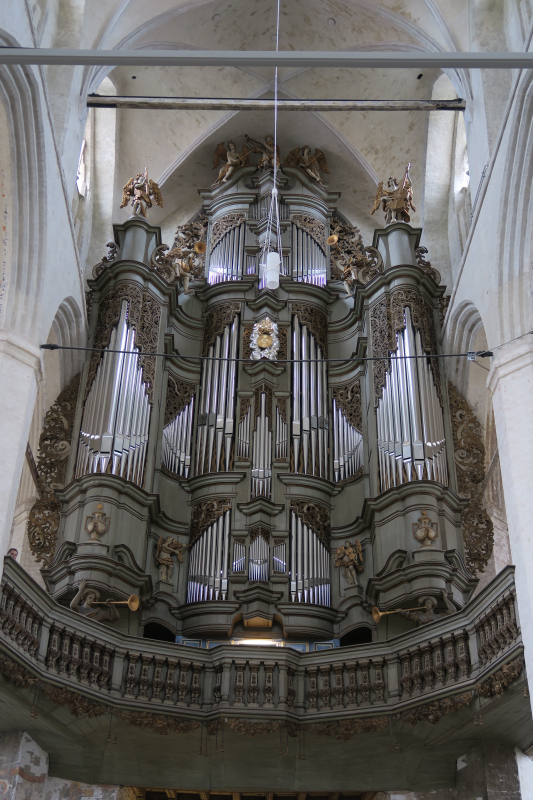
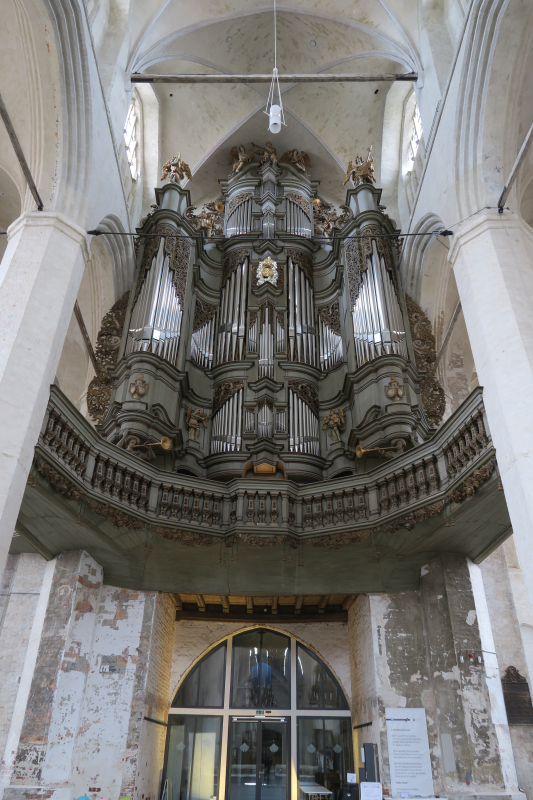
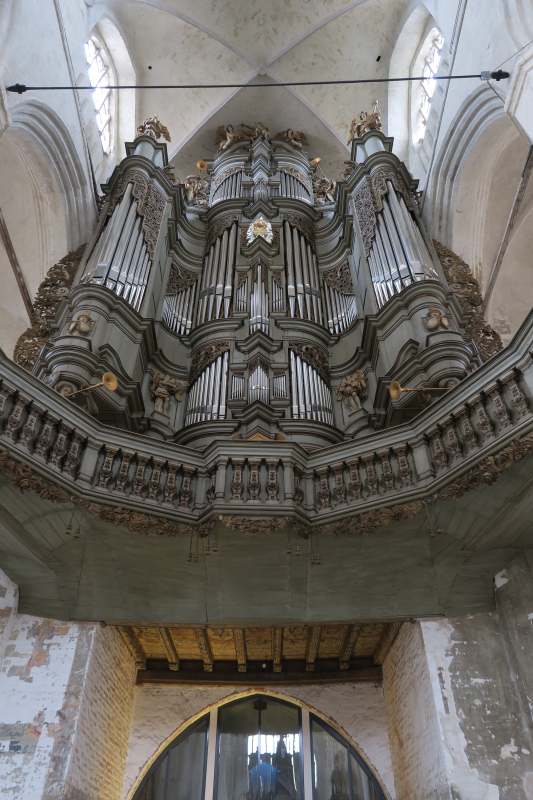
The organ of St. Jakobi in Stralsund has a long and eventful history. An organ is documented in the church as early as 1582, and the instrument was subsequently repaired and rebuilt several times. Between 1732 and 1741, Christian Gottlieb Richter of Stettin built a new three-manual organ with 42 stops, whose magnificent Baroque case, completed in 1741, has survived to the present day. Ernst Julius Marx rebuilt the organ in 1778–1783, retaining the historic case, and further work was carried out by Carl August Buchholz in 1829. In 1877, Friedrich Albert Mehmel replaced the instrument with a much larger four-manual organ of 68 stops. The Mehmel organ was severely damaged when the church was bombed in 1944 and was subsequently largely plundered and destroyed. The surviving Baroque case nevertheless preserved the architectural identity of the eighteenth-century instrument and later became the foundation for a completely new organ.
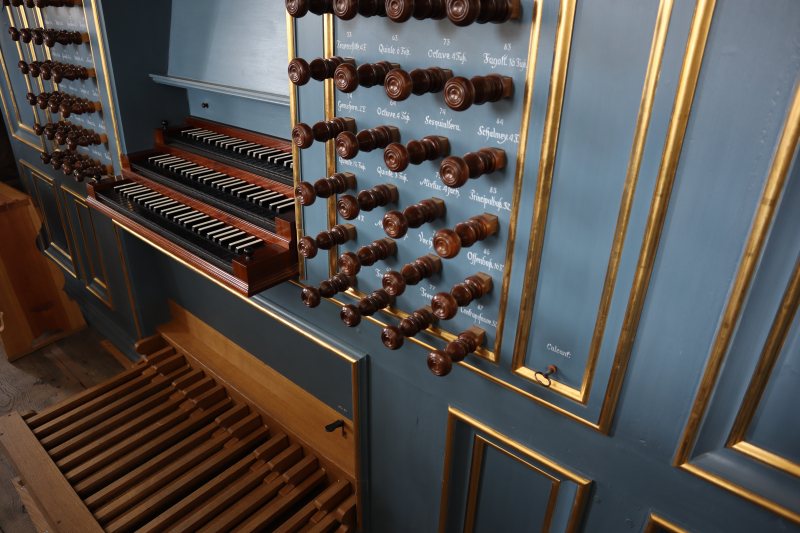
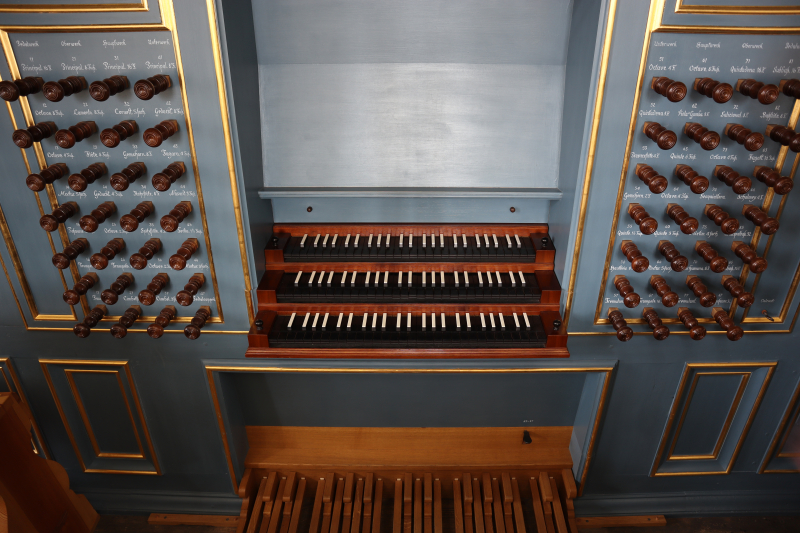
The present organ was built between 2017 and 2020 by the Dresden workshop of Kristian Wegscheider. It is not a reconstruction of the lost Mehmel organ, but a new High Baroque instrument whose dimensions, internal arrangement and specification relate to the historic case and to the concepts of the eighteenth-century organs by Richter and Marx. The instrument has 51 stops on three manuals and pedal and was constructed using craftsmanship corresponding to eighteenth-century organ building. Particularly characteristic is the orientation of its pipework and scaling towards Gottfried Silbermann and Joachim Wagner and their pupils, important models of Central and North German organ building of the eighteenth century. At the same time, the new organ incorporates significant surviving material from its predecessors, including Richter's 1741 pedal windchests, Marx's Oberwerk windchest, and three ranks from Mehmel's 1877 organ. The historic case was thoroughly restored and returned to its original dimensions.
The resulting instrument combines the historical identity of the eighteenth-century case with a new tonal and technical conception rooted firmly in the High Baroque. With 51 stops, 71 ranks and 3,246 pipes, it offers substantial tonal resources on three manuals and pedal. Its traditional construction includes mechanical slider chests and six wedge bellows, while the pipework and scaling follow the models of Silbermann, Wagner and their pupils. Particularly remarkable is the preservation of three original Mehmel stops from 1877 in the separate Great Pedal: Principalbass 32′, Offenbass 16′ and Contraposaune 32′. These three stops are retained on their own individual windchests, together with the historic Mehmel wind supply for the Great Pedal. This preserves a distinctive and substantial element of Mehmel's nineteenth-century organ within the new eighteenth-century tonal conception. The combination of the restored Baroque case, authentic components from the Richter, Marx and Mehmel organs, and newly built pipework and mechanism makes the present instrument a particularly unusual continuation of the history of St. Jakobi.
Futher reading:
Features
(No) Encryption
The samples are offered in 48kHz/24bit resolution. The multiple releases have three levels: short, mid and long. Hauptwerk v4.2 and higher supported. Plain wave format (no encryption).
Reverberation Time
The real recorded release samples have a reverberation time of approx. 6.5 seconds.
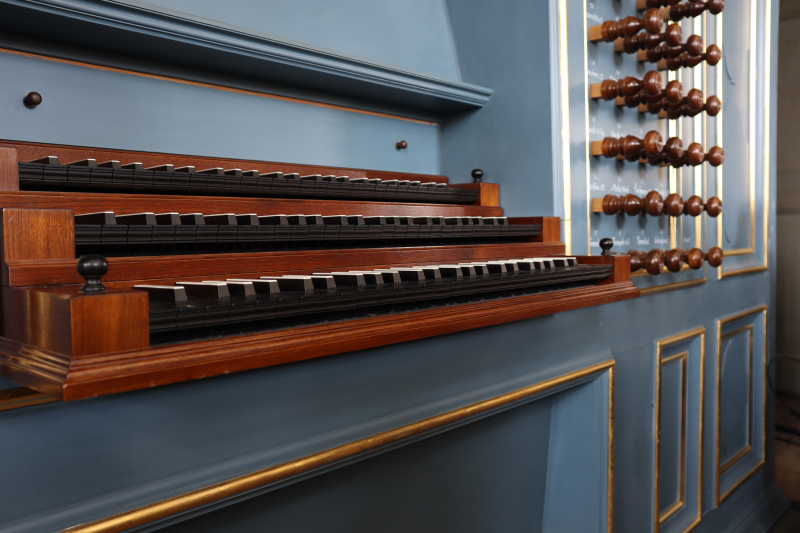
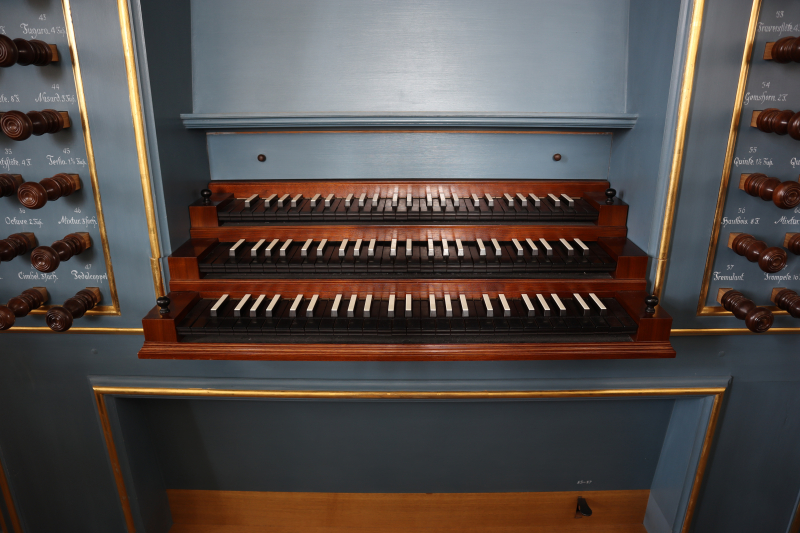
Keyboards, pedalboard
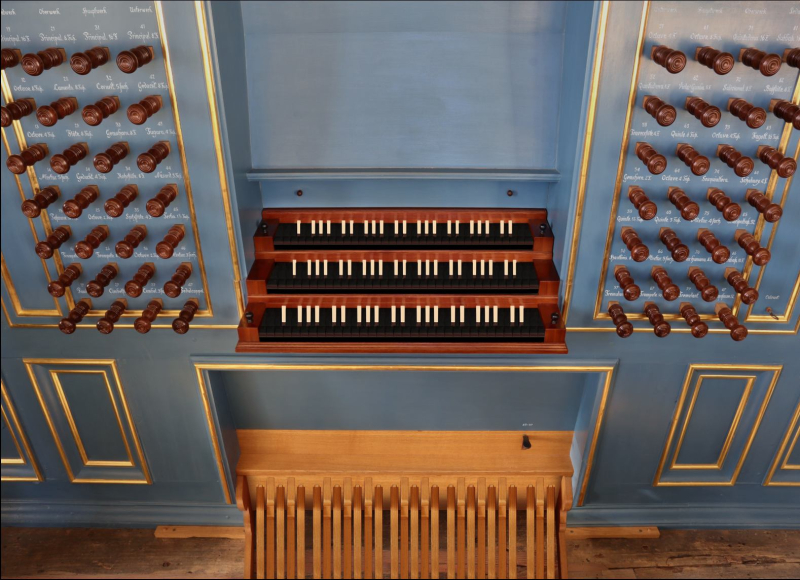
The original compass of the keyboards is 53 keys (low C# missing), extendable to 56 keys via a mixer switch. The original compass of the pedal division is 27 keys, extendable to 30 keys via a mixer switch.
Tremulants
All ranks of the were recorded with and without tremulants for the most convincing tremulant behavior. It is possible to select to use the artificial tremulant instead if desired (the switch is located on the mixer tab).
Requirements
RAM consumption: 6-channel surround
16-bit, other settings default: 25.1 GB
20-bit, other settings default: 45.4 GB
24-bit, other settings default: 53.4 GB
Screen resolution 1280x1024 px or more.
Polyphony of 8.000 voices recommended for the full suround.
Surround format
The sample set is offered in a Surround variant (6 channels). There are direct channels, diffuse channels, and rear channels.
To reproduce the surround format, an audio card with at least 4 output channels is required, dedicating the direct and diffuse channels for the front speakers, and other two channels for the rear speakers.
| I Unterwerk | II Hauptwerk | III Oberwerk | Pedal |
|
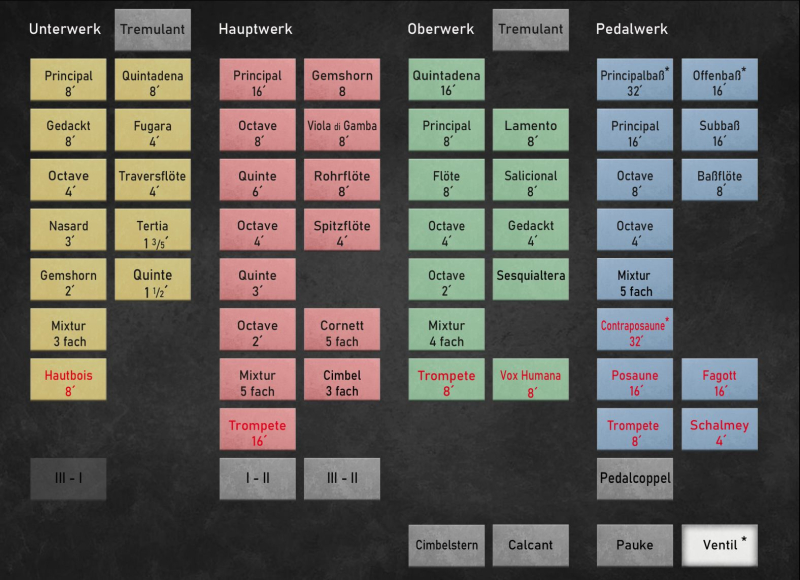
Principal 8' Gedackt 8' Quintadena 8' Octave 4' Traversflöte 4' Fugara 4' Nasard 3' Gemshorn 2' Tertia 13/5' Quinte 11/3' Mixtur 3f Hautbois 8' |
Principal 16' Octave 8' Gemshorn 8' Viola di Gamba 8' Rohrflöte 8' Quinte 6' Octave 4' Spitzflöte 4' Quinte 3' Octave 2' Cornet 5f Mixtur 5f Cimbel 4f Trompete 16' |
Quintadena 16' Principal 8' Lamento 8' (celeste) Salicional 8' Flöte 8' Octave 4' Gedackt 4' Sesquialtera Octave 2' Mixtur 4f Trompete 8’ Vox humana 8' |
Principal 32'* Principal 16' Offenbaß 16'* Subbaß 16' Octave 8' Baßflöte 8’ Octave 4' Mixtur 5f Posaune 32'* Posaune 16' Fagott 16' Trompete 8' Schalmey 4' |
Accessories
Couplers: I/II, III/II, II/P. (III/I added in Hauptwerk)
Tremulants UW, OW.
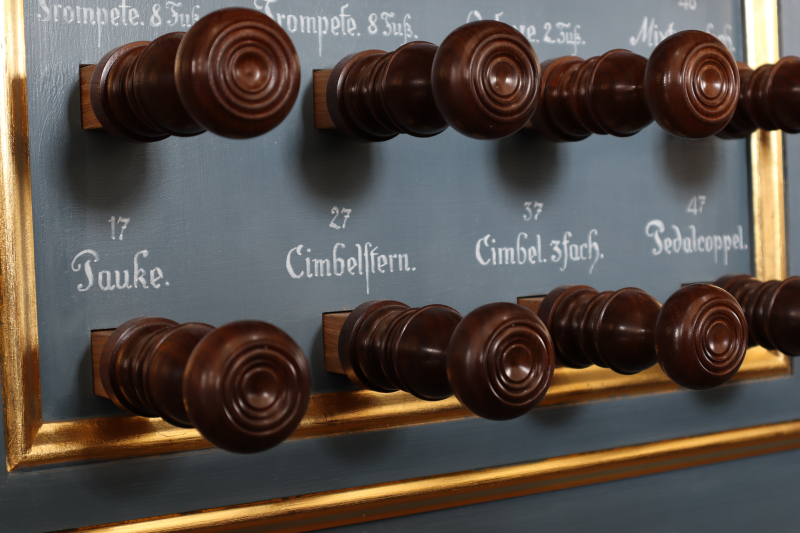
Cimbelstern, Pauken, Calcant.
Ventil for the three biggest pedal stops (asterix marked *).

Screenshots
|
|
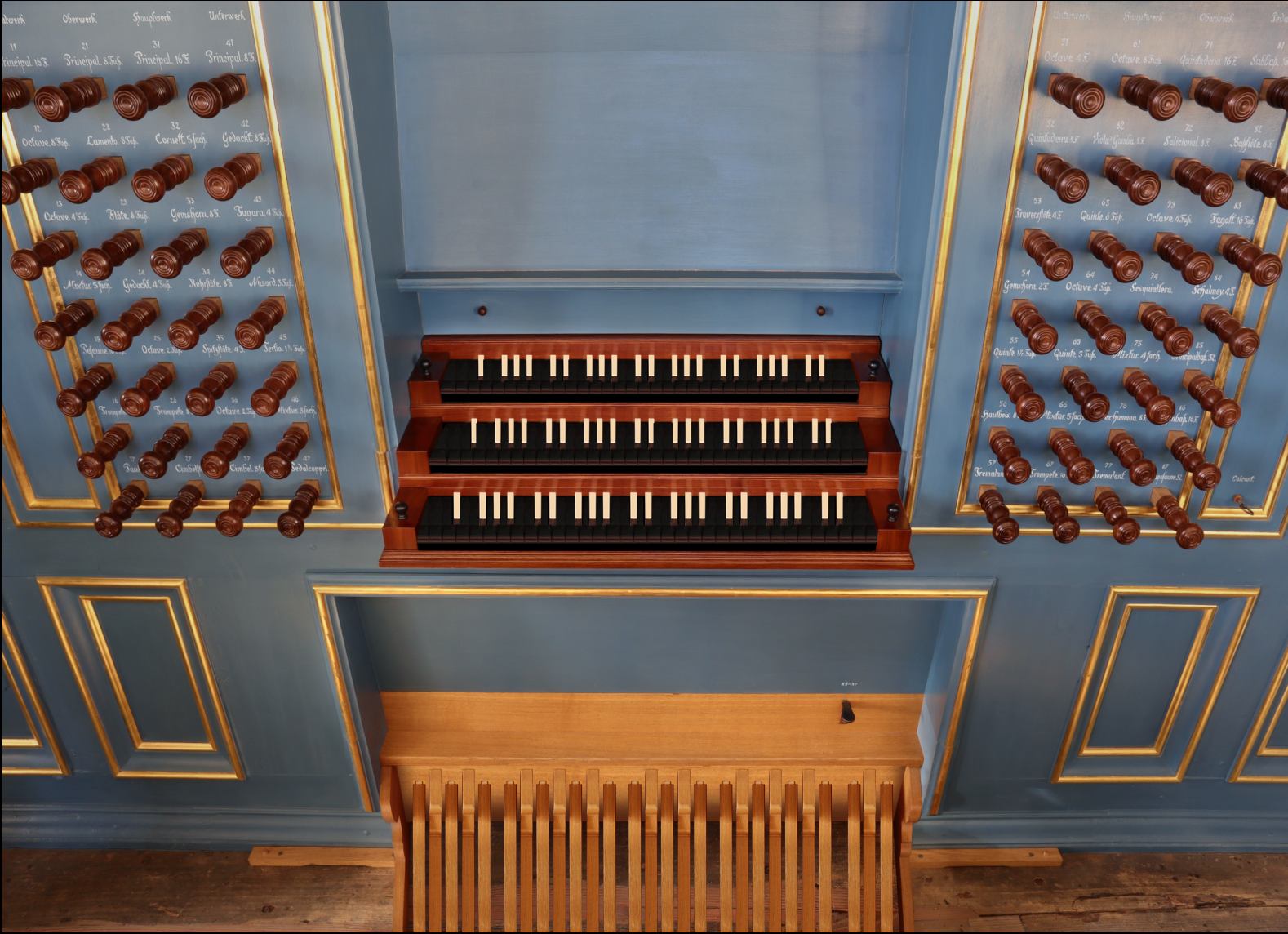
Console view: this is the general console view. It serves to define the keyboard MIDI inputs for all the divisions. The only active part of this view are the manuals and the pedals. Specifying the MIDI inputs is done by right-clicking on the desired manual or pedal. All the other screen components are image-only.
|
|
|
|
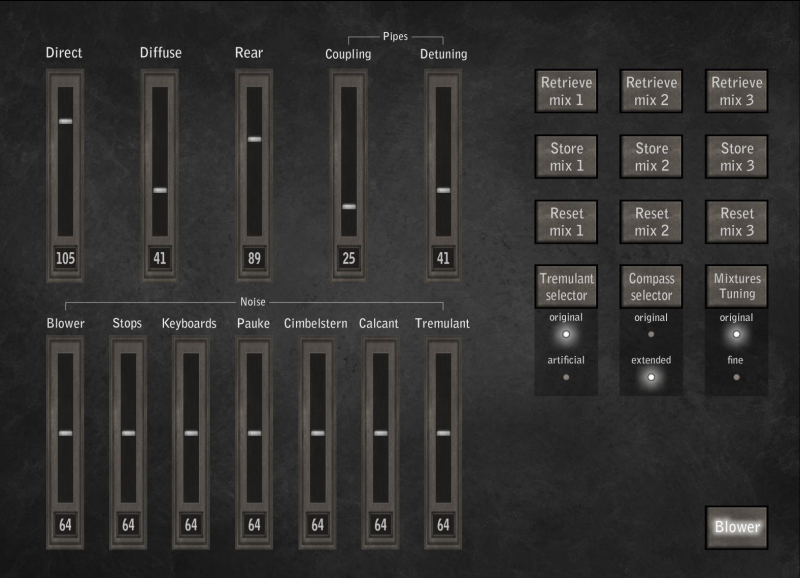
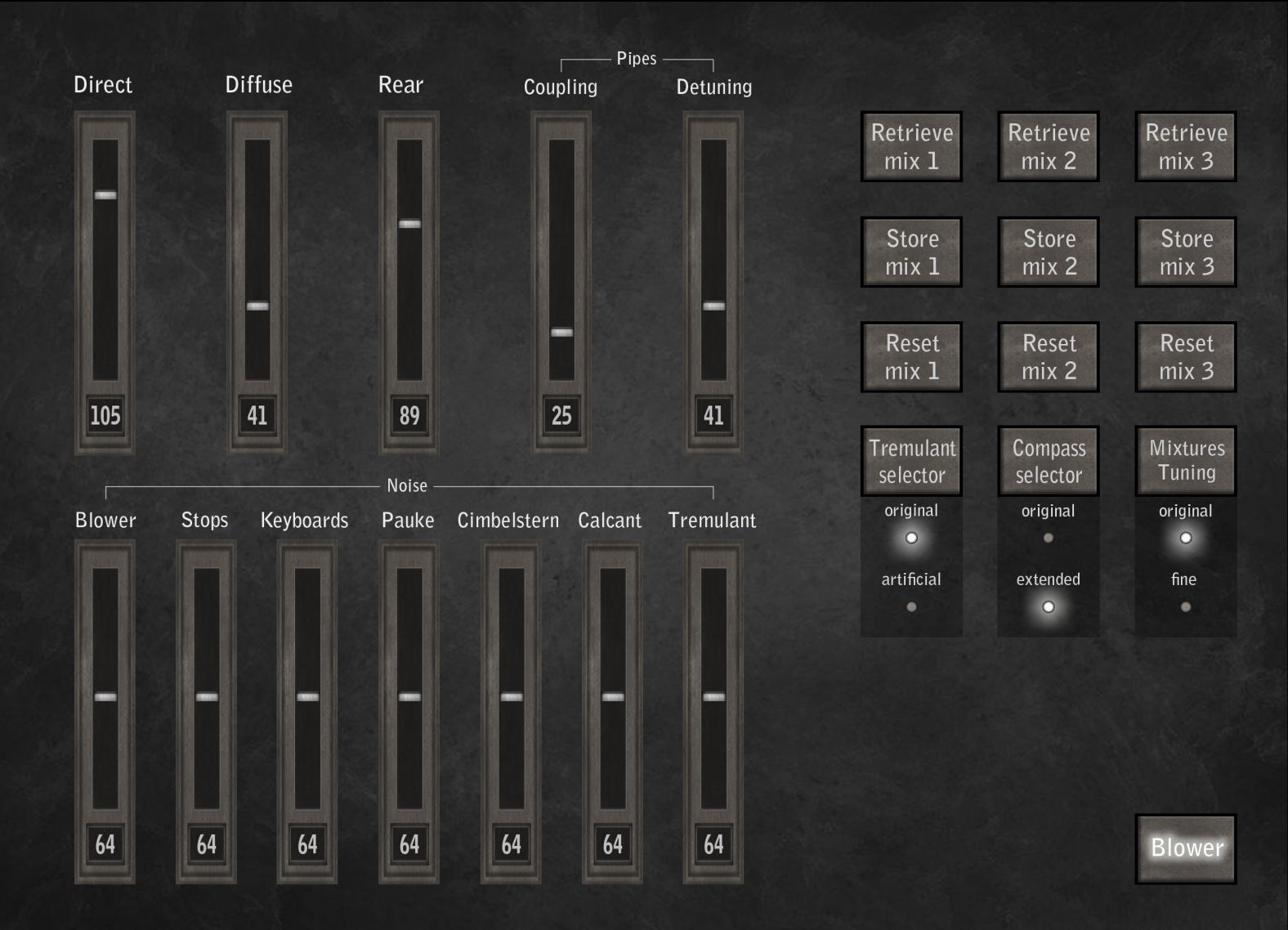
Mixer view: The output levels of the direct, diffuse, and rear ranks can be adjusted here. Also the blower and tremulant noises can be adjusted. The pipe coupling and pipe detuning features can be adjusted. The sound gets somewhat mistuned with higher settings, giving the "chorus" effect to the overall sound, often found pleasingly "floating". The mixer settings can be stored, retrieved, reset. 3 different mixer settings can be stored/recalled any time. The switches: Select the sampled (real) tremulant or the artificial (Hauptwerk model) tremulant. Select the mixtures sounding as recorded (casually mistuned) or purely tuned. The compass extension allows for the top most added keys to be heard. Blower switch must be always on (to give virtual air into the organ, allowing it to speak). |
|
 |
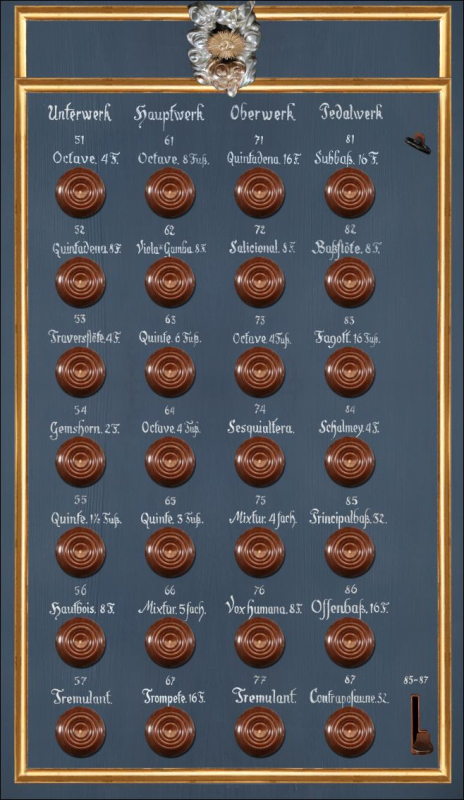
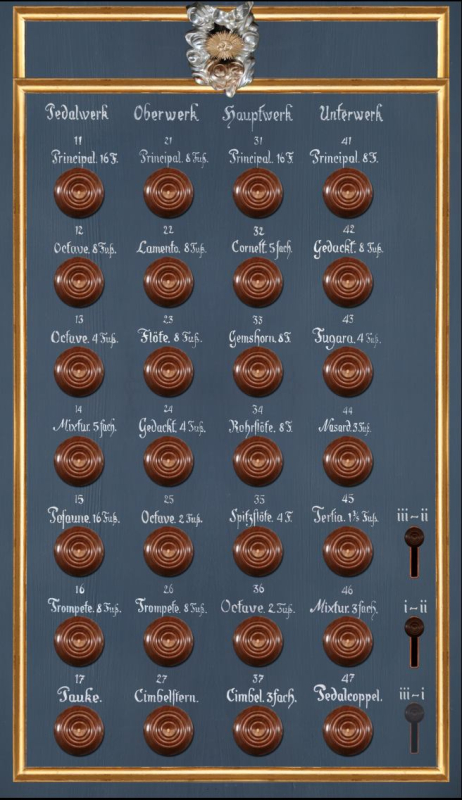
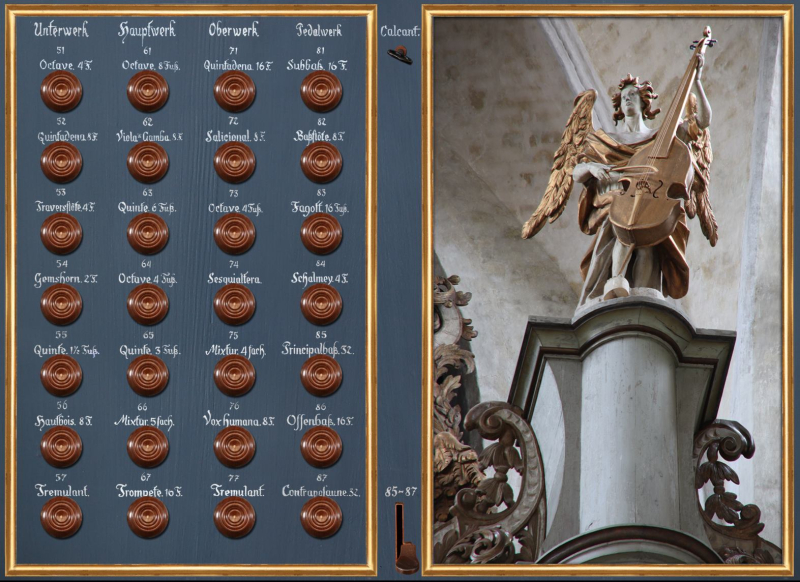
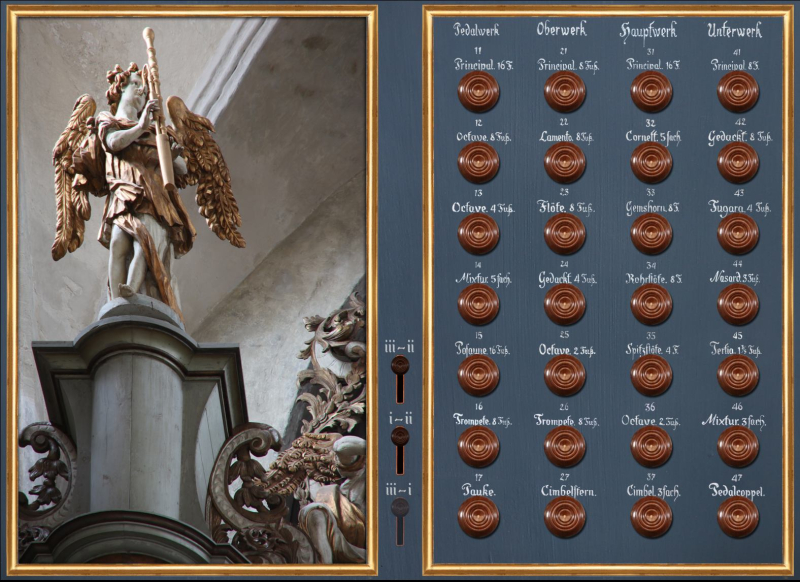
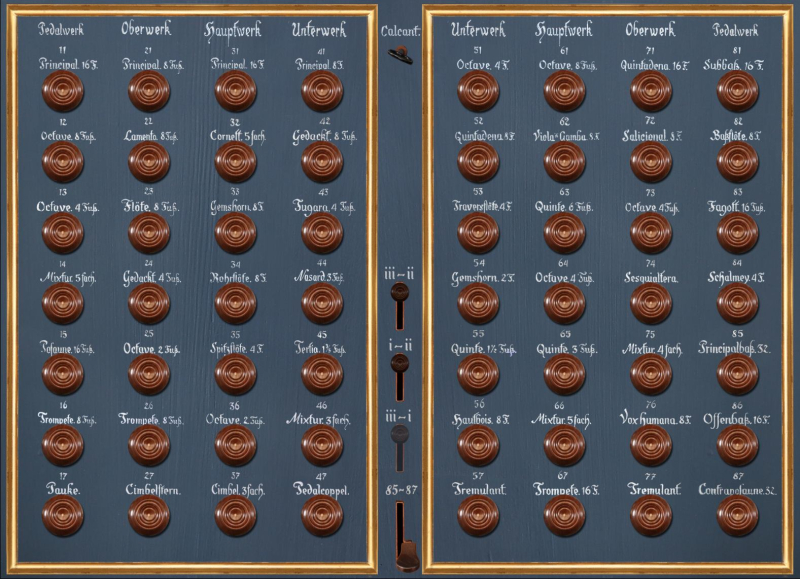
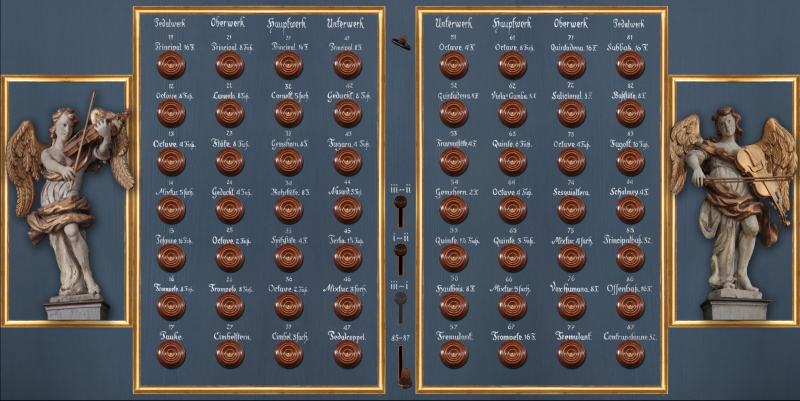
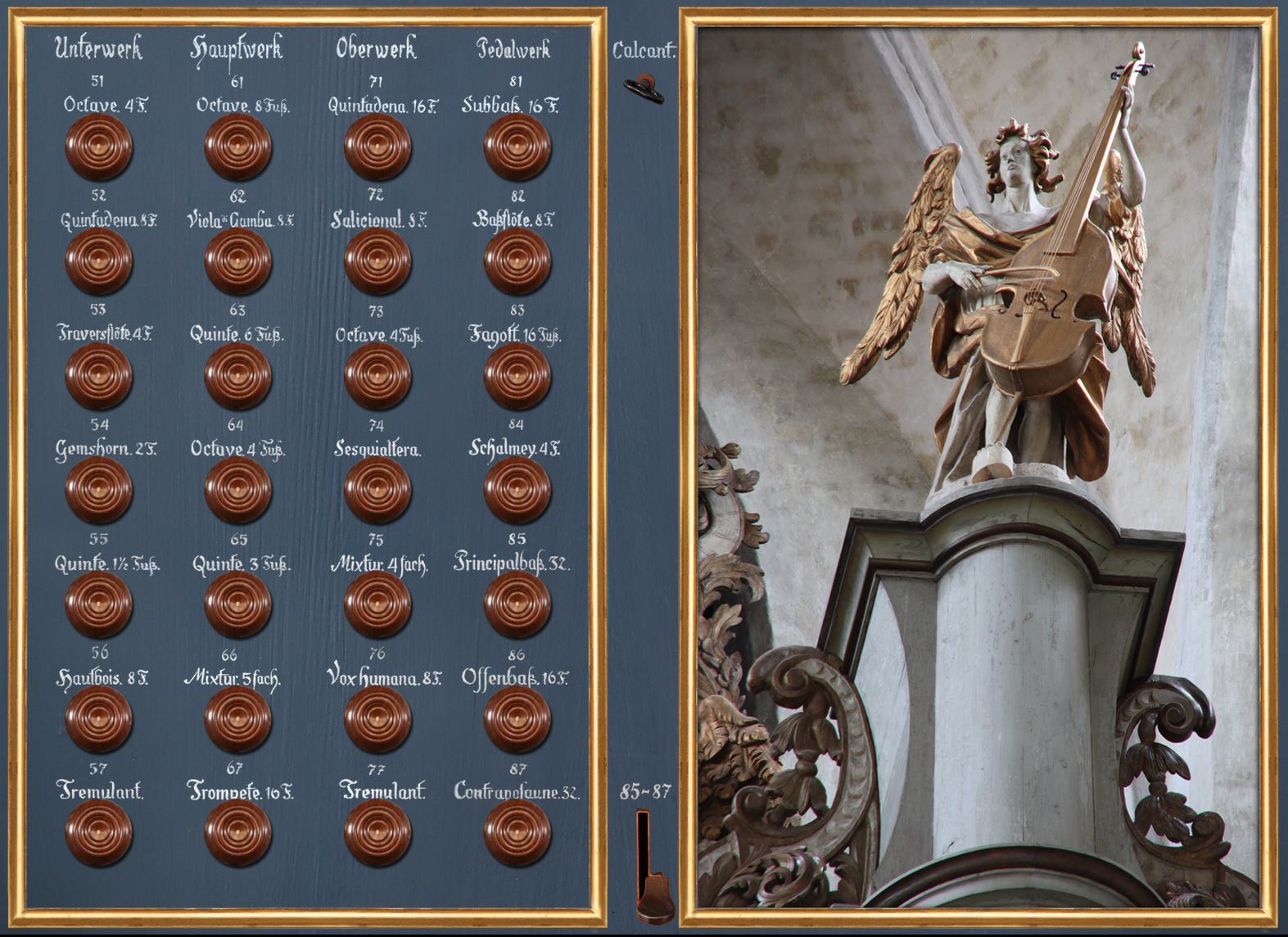
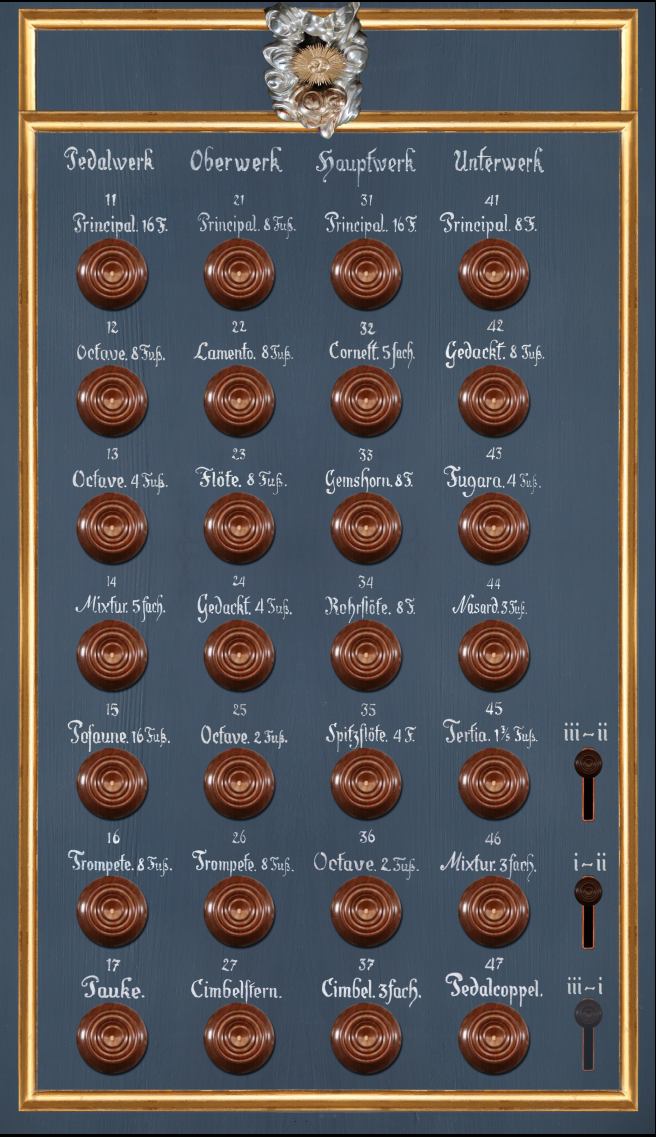
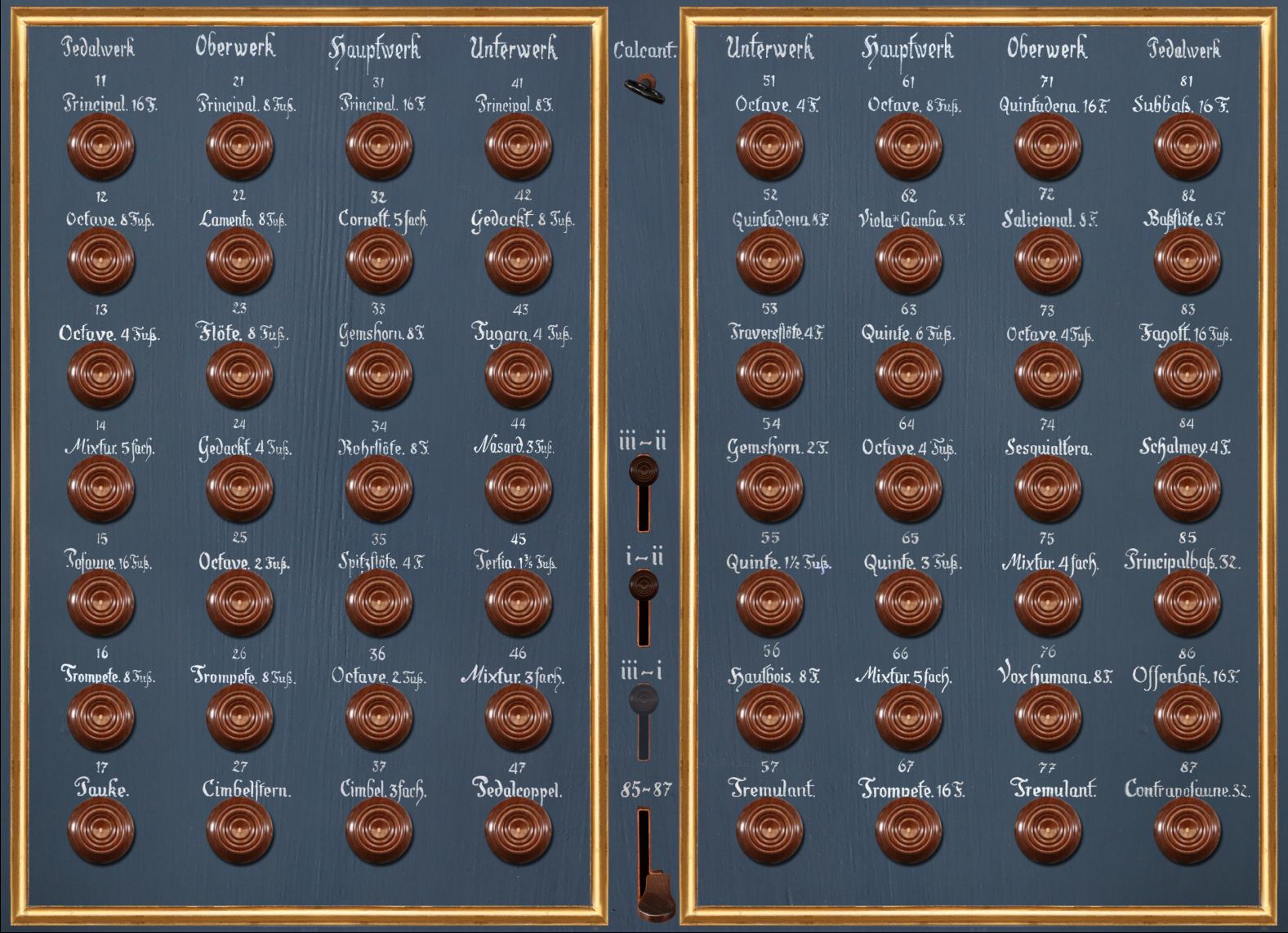
Left+Right Jambs view: for dual touch screens, split jambs were created. They allow for portrait or landscape orientation, according to the orientation of the touch screens.
|
|
|
|
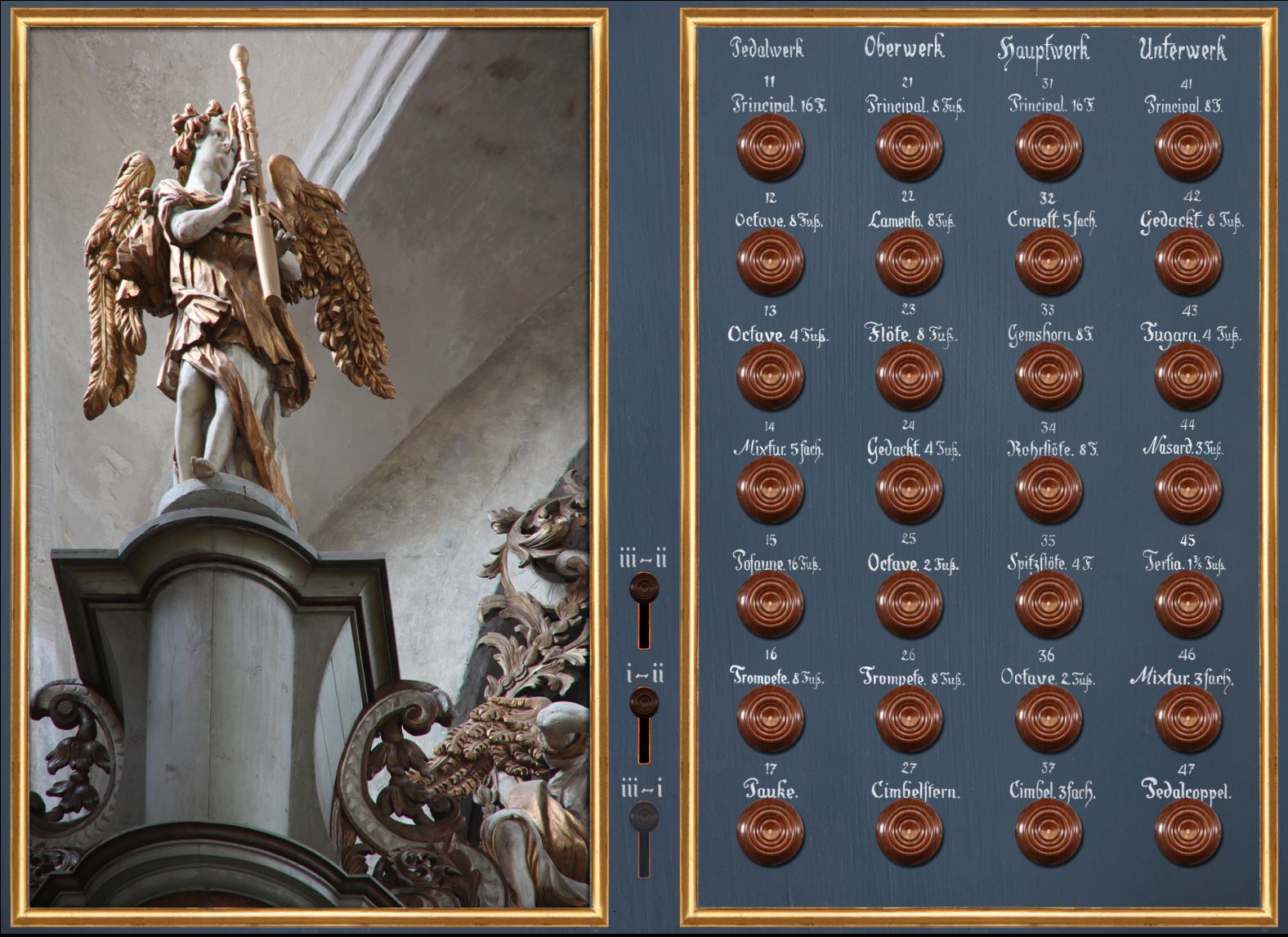
Left + Right Jambs Vertical view: the dual stop jambs offer vertical (portrait) orientation as an alternative. |
|
|
|
|
|
|
|
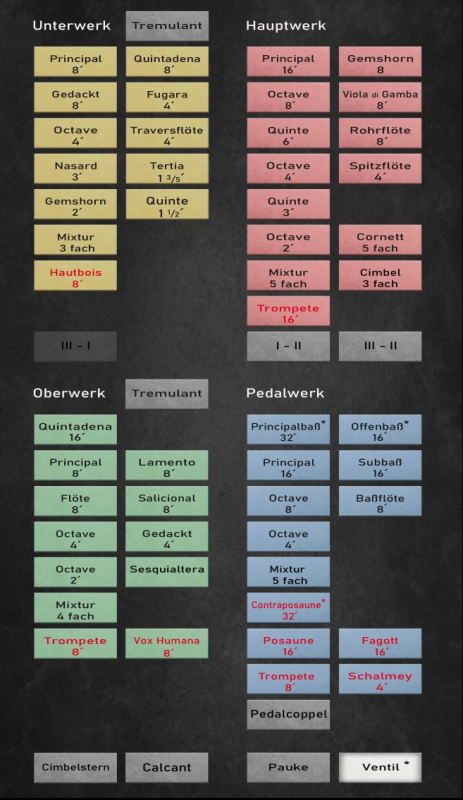
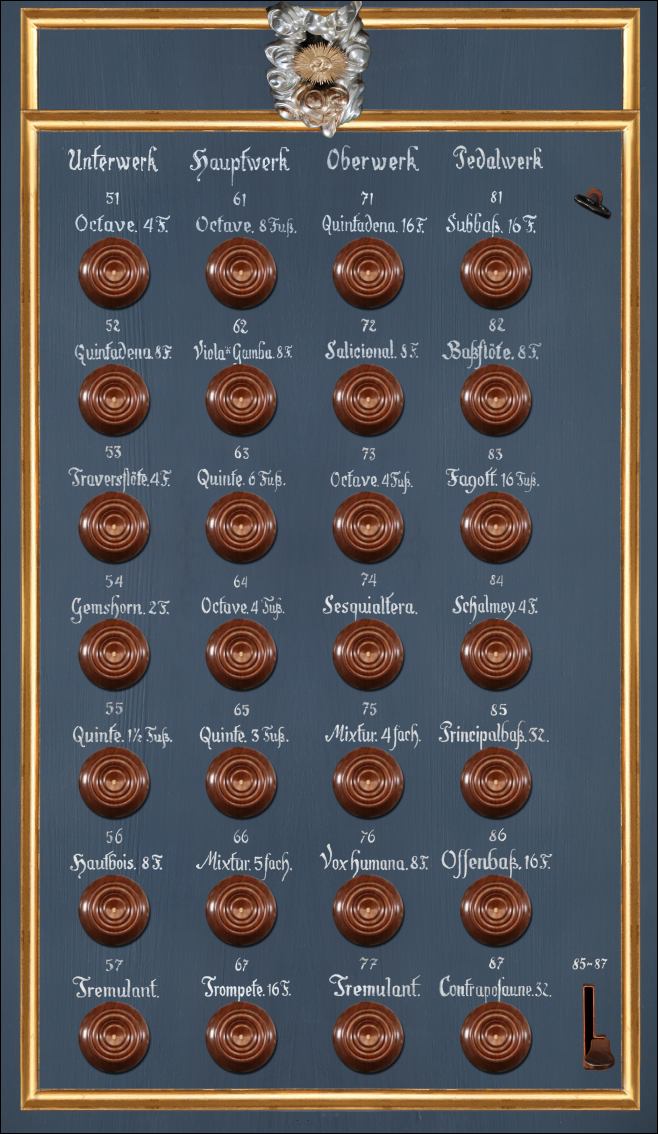
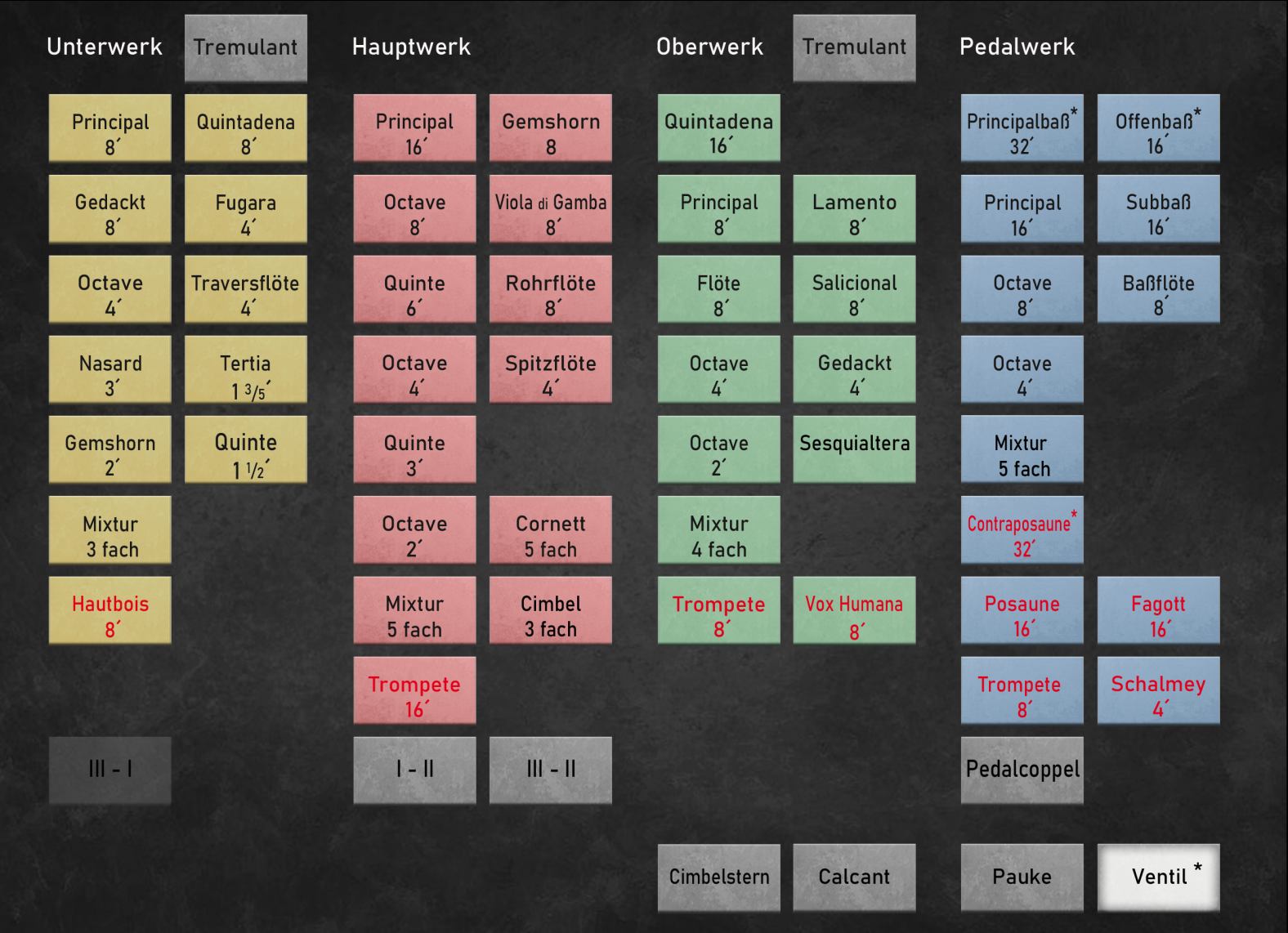
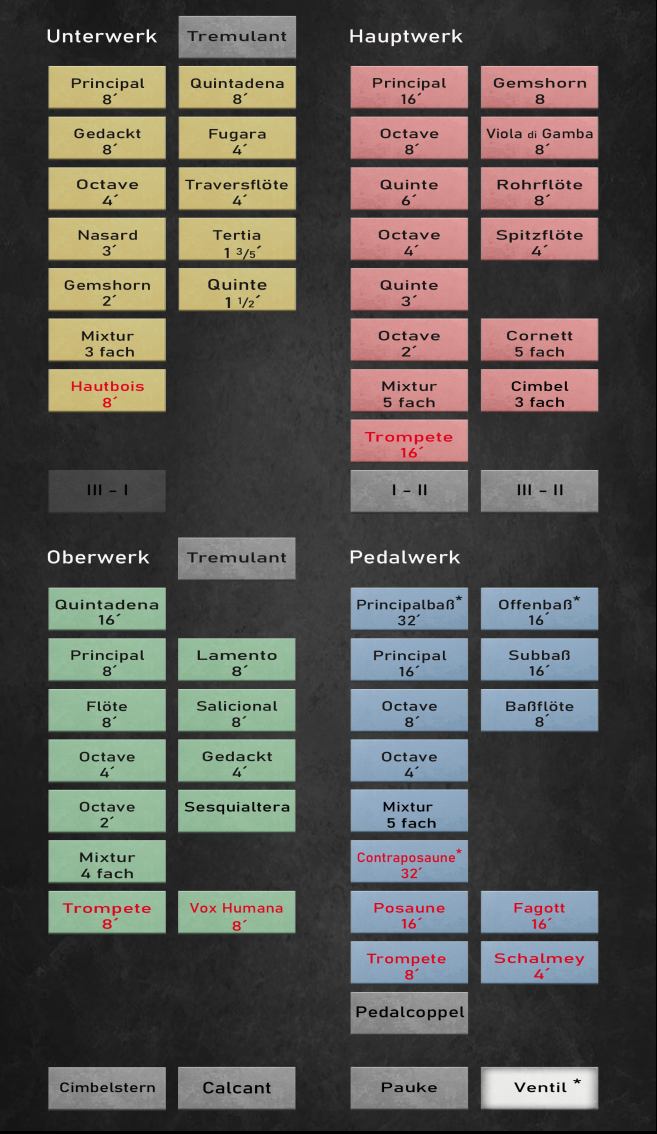
Simple Jamb: simplified version of a single jamb to allow for more readable version of the stop names on small LCD touch screens. There are two variants: landscape and portrait. All the stops of the organ can be found here. Physical pistons or draw stops can be assigned to a virtual button on screen by right-clicking on the button. The indicators for BW swell shutters show the actual position of the pedals. |
|
|
|
Single Jamb: All the stops are available on a single screen.
|
|

-
Stralsund, St. Jakobi, vol.1
Direct, diffuse channels, but ALL stops. Minimum Hauptwerk version: 4.2. (Also works in all higher versions.) No encryption.
Use this sample set and support my project:
1.) Spread the word among your friends about my generosity in offering these fantastic sample sets for free.
2.) Buy Vol. 2. It contains the rear samples for this set—and helps funding my future work.
Your financial support is essential. Don’t fall for the illusion that sample sets of this quality simply materialize out of thin air. Behind them are my expertise, enormous effort, huge investments, and hundreds of hours of work. -
Stralsund, St. Jakobi, vol.2
Rear channels for Vol. 1, extending the original sample set. Install Vol. 1 first, then Vol. 2. Minimum Hauptwerk version: 4.2 (compatible with all later versions). No encryption.